
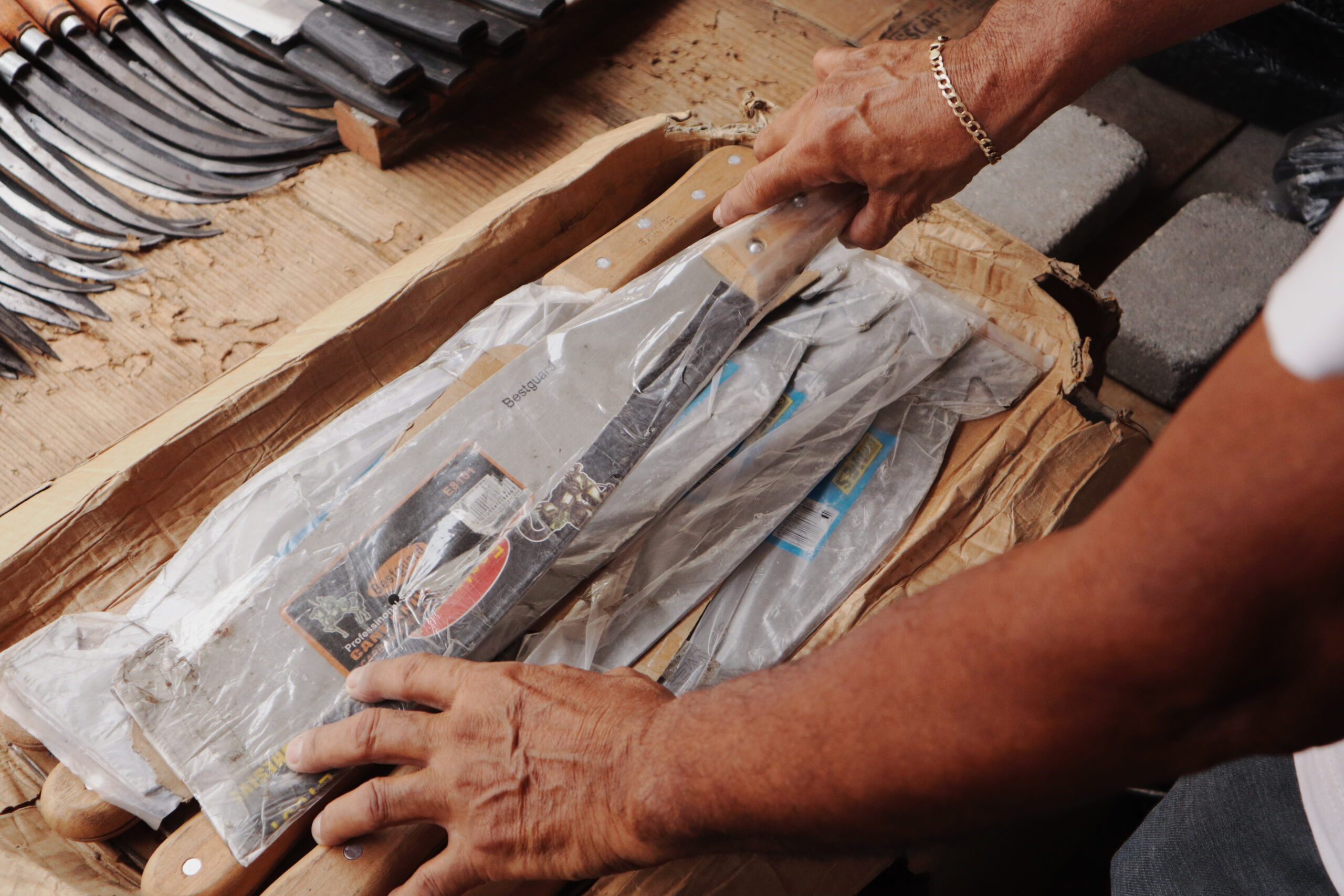
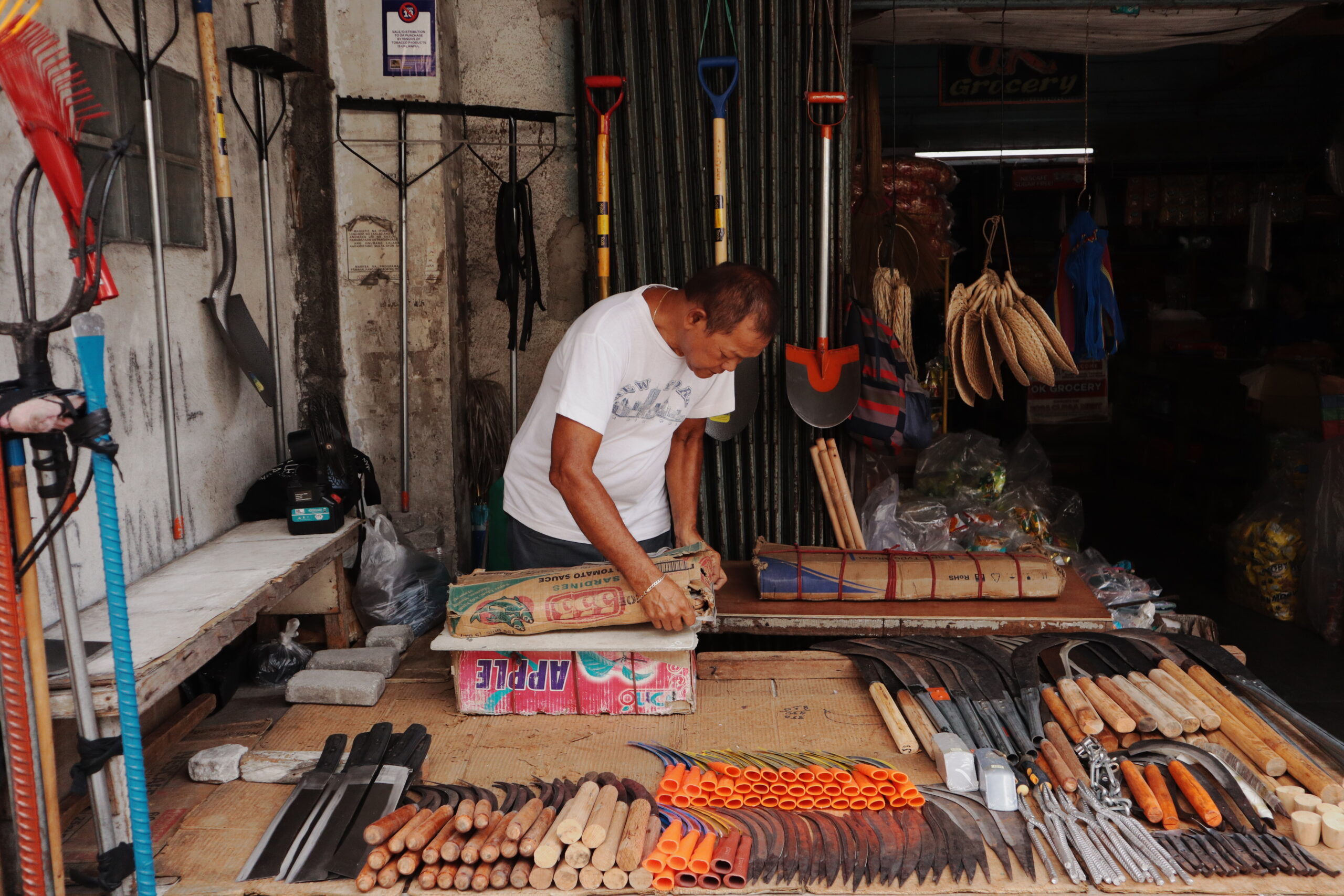
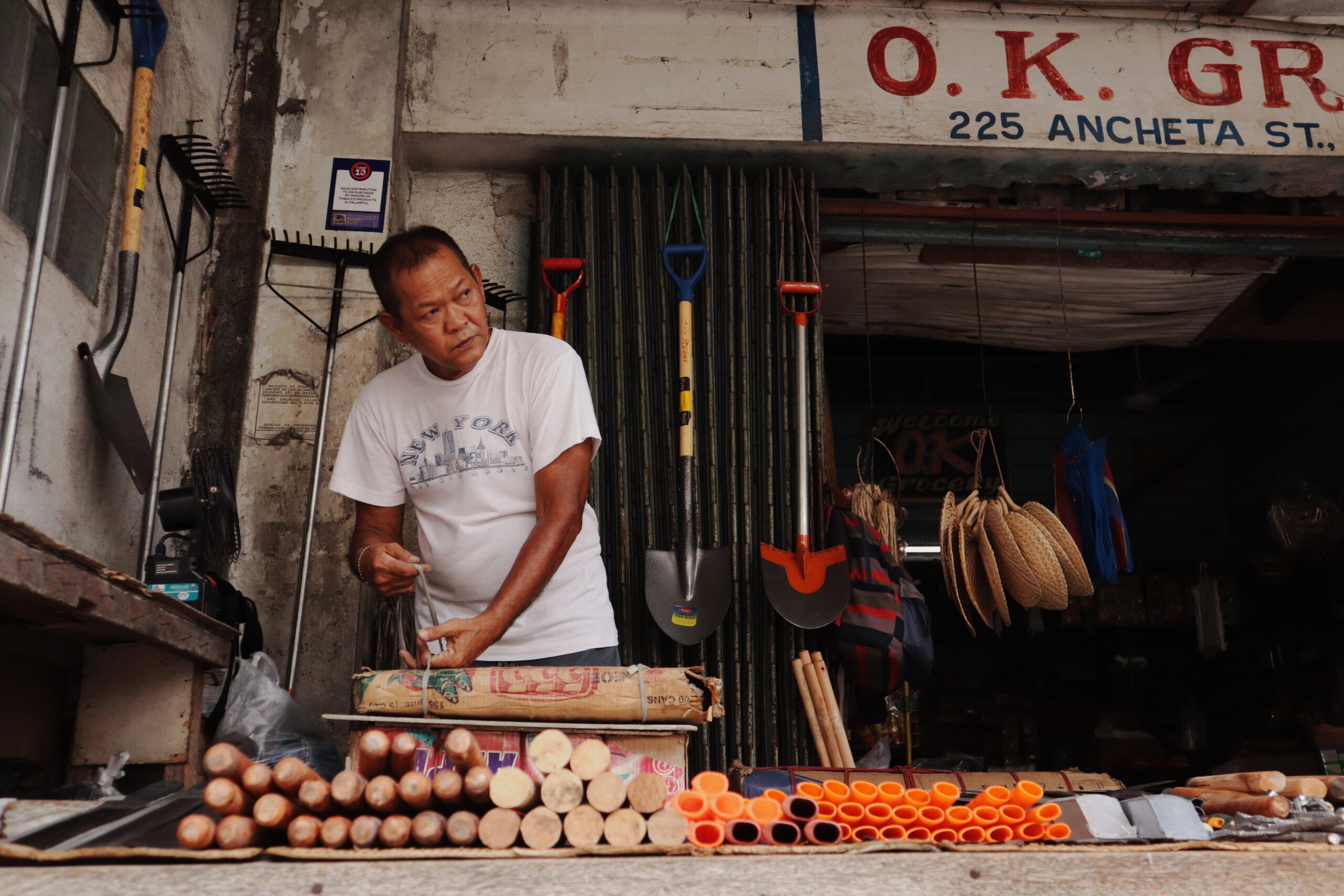
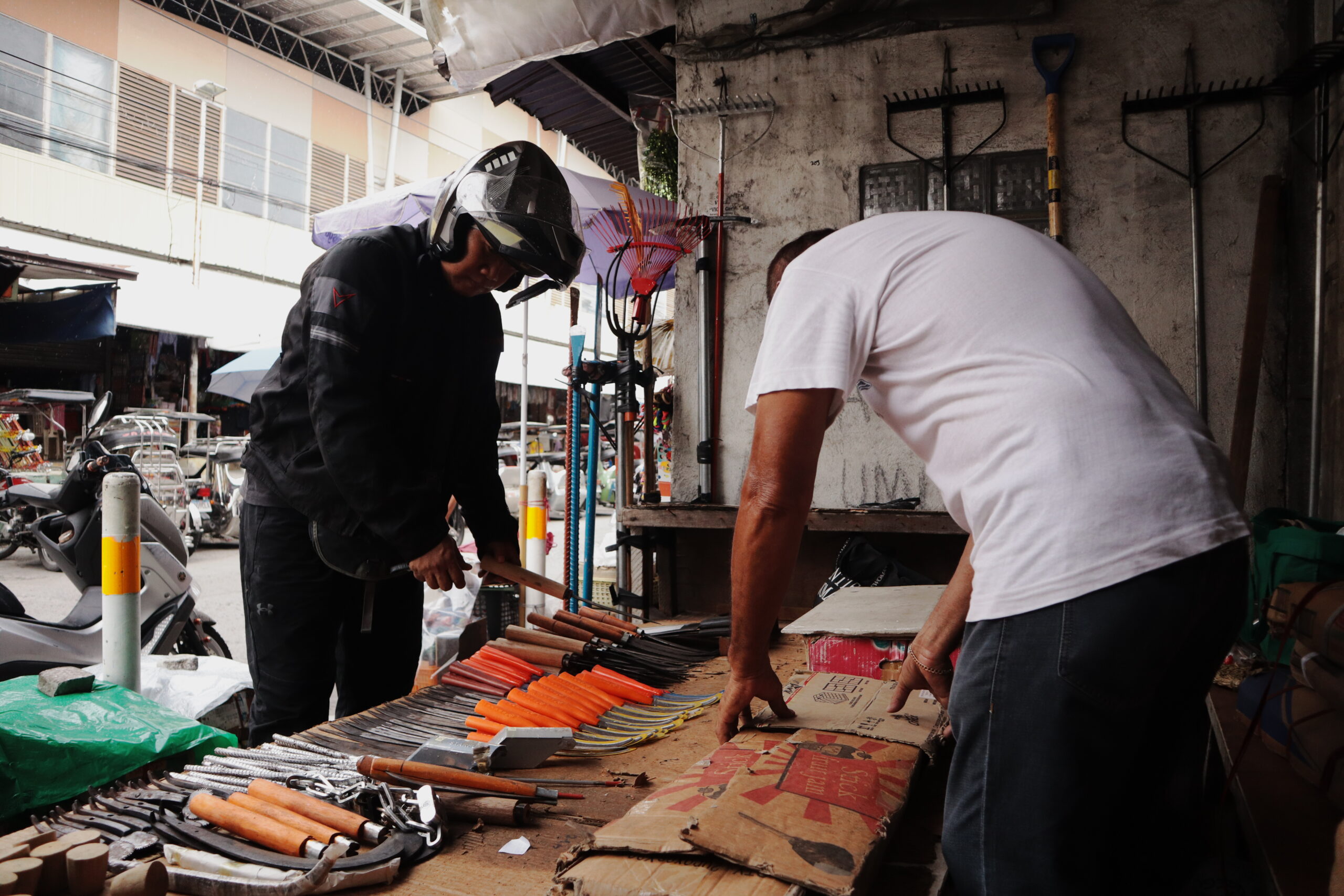
TARLAC CITY, Tarlac — The sharp, metallic tang of forged iron clings to the air along Ancheta Street, a bustling vein in the heart of Tarlac City. Amid the modern storefronts and the rhythmic hum of daily traffic sits a modest shop that feels like a portal to an older, grittier time. Here, rows of glinting bolos, curved sickles, and heavy-duty bladed tools stand like silent sentinels of a fading era.
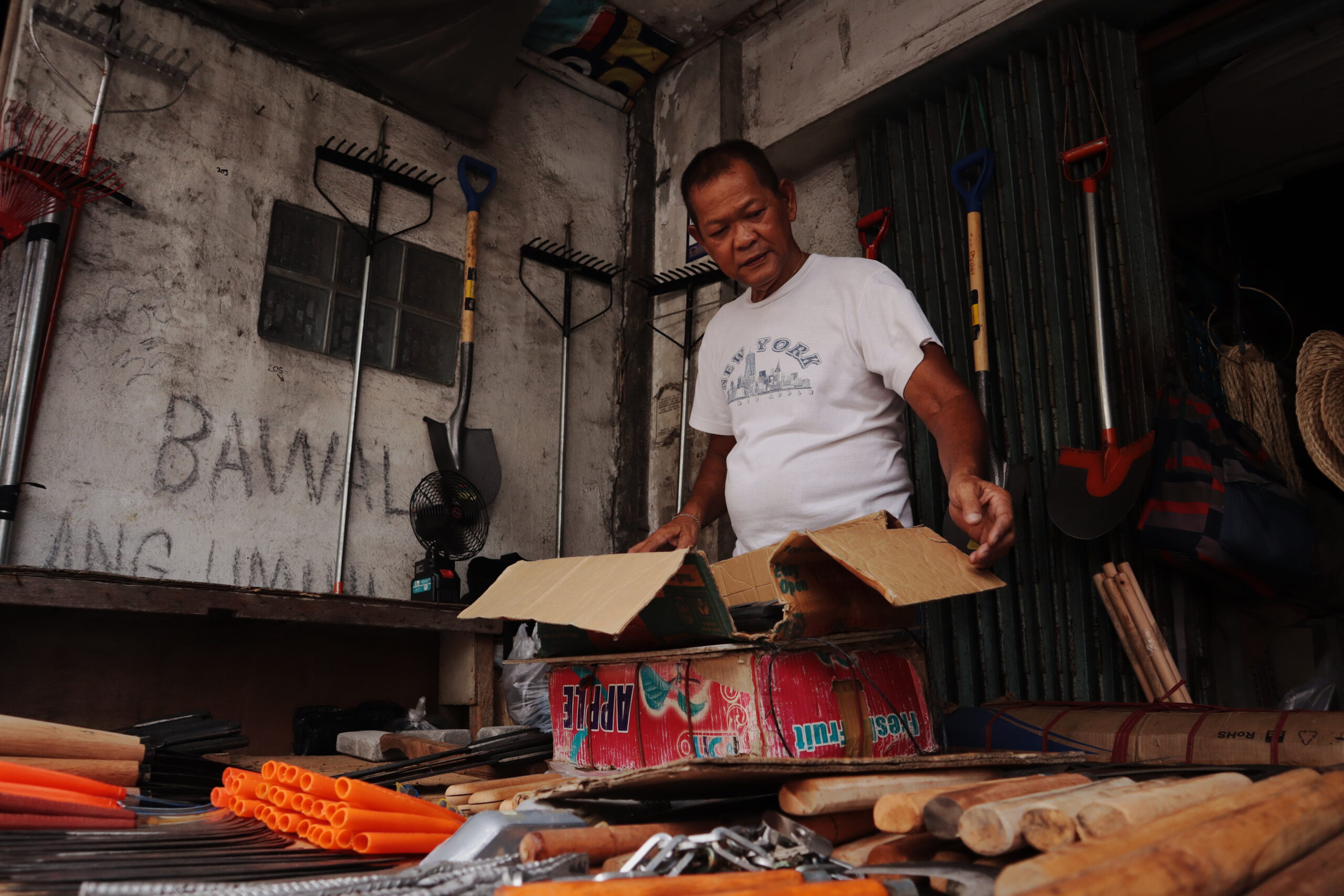
Behind the counter stands 65-year-old Marlon Torres, a man whose palms bear the invisible calluses of a half-century-old legacy.
“Mahalin mo ang pinagpaguran mo,” Torres says, his voice carrying the quiet weight of a man who has lived by the very words he preaches.
The story of this shop did not begin with Torres, but with the steady, rhythmic striking of his father’s hammer against an anvil 46 years ago. His father was a blacksmith, a master of fire and iron.
As a high school student, while his peers were dreaming of the future, Torres was already learning the realities of survival. He became his father’s shadow, packing heavy blades into crates and traveling from town to town, chasing the vibrant, chaotic energy of local fiestas across Tarlac province to set up temporary stalls.
What began as a dutiful son helping his father eventually transformed into a lifelong calling. The anvil ceased its ringing long ago, but the hustle never stopped. For the past 15 years, Torres has operated from this very spot on Ancheta Street. Every single day, from the stroke of 8:00 AM until the shutters come down at 5:00 PM, he is there, a reliable fixture for local farmers, gardeners, and tradesmen seeking tools forged with integrity.
The blades he sells carry their own geography. They travel from the traditional blacksmithing hubs of Batangas, Tuguegarao, Apalit in Pampanga, and Pangasinan, converging in Tarlac City under Torres’ watchful eye. He knows the weight of a good blade, the balance of a handle, and the precise curve needed to slash through thick sugarcane or wild brush.
Yet, relying on the land and the tools that clear it is a volatile gamble. In the age of digital convenience and mass-produced imports, the ancient trade of selling forged steel is subject to the unpredictable whims of foot traffic.
“Nasa P500 to P700. Pinakamataas na yung P1,000,” Torres admits, tracking the daily ebb and flow of his earnings. Some days the cash drawer is heavy; other days, the silence in the shop is deafening. “May mga araw na meron at may mga araw na walang kita.”
Yet, from that very uncertainty, Torres forged a certainty for his family. Operating from his home base in Barangay Carangian, this humble trade of iron and steel became the foundation for his children’s dreams. Through the steady sale of bolos and sickles, Torres raised five children. Today, three of them hold college degrees — two walk the world as Civil Engineers, and another is a graduate of Hotel and Restaurant Management. The blades that cleared the fields of Tarlac also cleared a path for the next generation to build a different kind of future.
As the second of seven siblings, Torres views his daily grind not as a burden, but as a sacred inheritance. The shop is a living monument to the father who taught him how to work, how to endure, and how to survive.
For the young entrepreneurs standing on the precipice of business, paralyzed by the fear of bankruptcy or failure in a fast-paced world, the veteran vendor offers a piece of wisdom stripped of corporate jargon, forged in the fires of real-world experience.
“Try nang try, huwag kang panghinaan ng loob,” he advises.
Forty-six years after his father first heated the forge, and fifteen years since he set up his own anchor on Ancheta Street, Marlon Torres still opens his doors every morning. The world outside his shop changes by the minute, but inside, the values remain beautifully unyielding. It is a testament to what happens when a man decides to fiercely love the hard work he leaves behind.
