

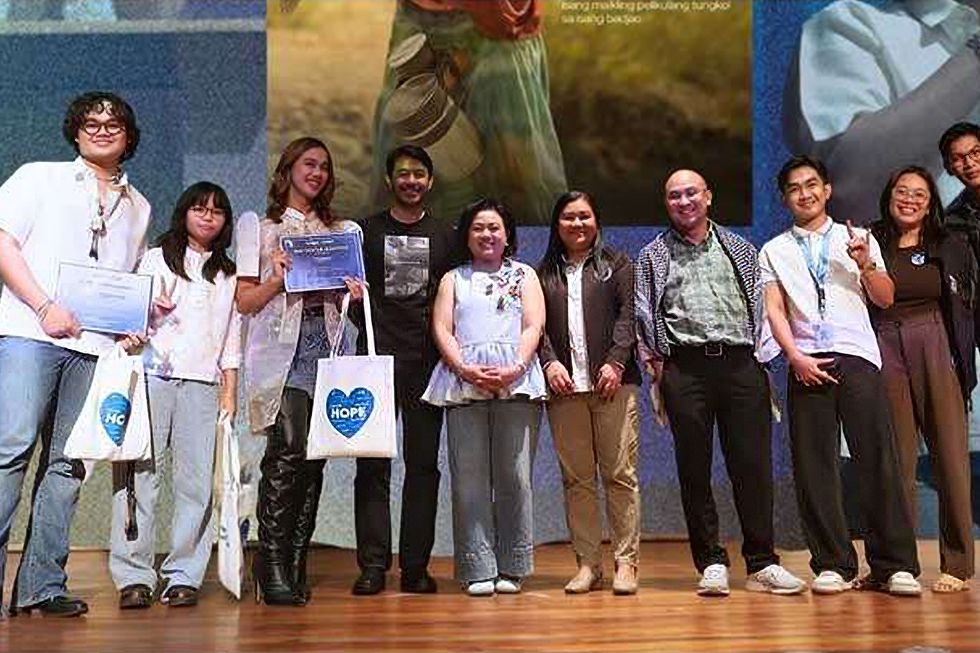
(TARLAKENYO) — Student filmmakers from Tarlac State University (TSU) captured the top award at the recently concluded 4th Refugee Film Festival short film competition, highlighting the powerful role of youth in amplifying the voices of displaced and marginalized communities.
The film Tambol, produced by the TSU-based TR3S Productions, was named Best Festival Short Film during the festival’s culminating awards ceremony held at De La Salle University Manila.
The project brought together a diverse group of Tarlac student talent, including Kharl Angelo Manaloto from the College of Public Administration and Governance, Kissy Pingol from the College of Arts and Social Sciences, and Angel Gabrielle Rico from the College of Computer Studies.
Their experimental masterpiece follows Ikil, a 19-year-old Badjao youth navigating forced displacement, systemic discrimination, and urban isolation.
Guided by the festival’s theme, “Solutions in Motion: Rebuilding Futures Together,” the TSU team moved beyond basic narratives of hardship, using compelling visuals and innovative storytelling to picture displaced individuals not merely as recipients of aid, but as active agents capable of shaping their own destinies. Along with the prestigious title, TR3S Productions took home a cash prize of P13,000 and an official certificate of recognition.
Hosted by the United Nations High Commissioner for Refugees (UNHCR) Philippines, the festival challenged Filipino filmmakers aged 18 to 25 to create three-to-seven-minute films that build global empathy for the more than 123 million forcibly displaced persons worldwide.
The nationwide competition falls in line with the observance of National Refugee Day every June 20, an initiative formalized under Proclamation No. 265 series of 2023 by President Ferdinand Marcos Jr., which calls upon state universities and colleges to actively engage in raising awareness for stateless individuals and refugees.
Other top distinctions in the short film category went to Columban College, Inc., which secured the second prize of P10,000 for its documentary First, tracking the historic graduation of the first Rohingya refugee scholars in the Philippines.
The University of Makati placed third, earning P7,000 for Langit Lupa, a thesis film focusing on a family battling environmental and social challenges brought by chronic flooding in Pampanga.
Organizers noted that by shifting the cinematic lens toward solidarity, young local storytellers from provinces like Tarlac continue to demonstrate the unique power of film to foster profound societal empathy, drive essential legal recognition, and inspire deep systemic social change.
