

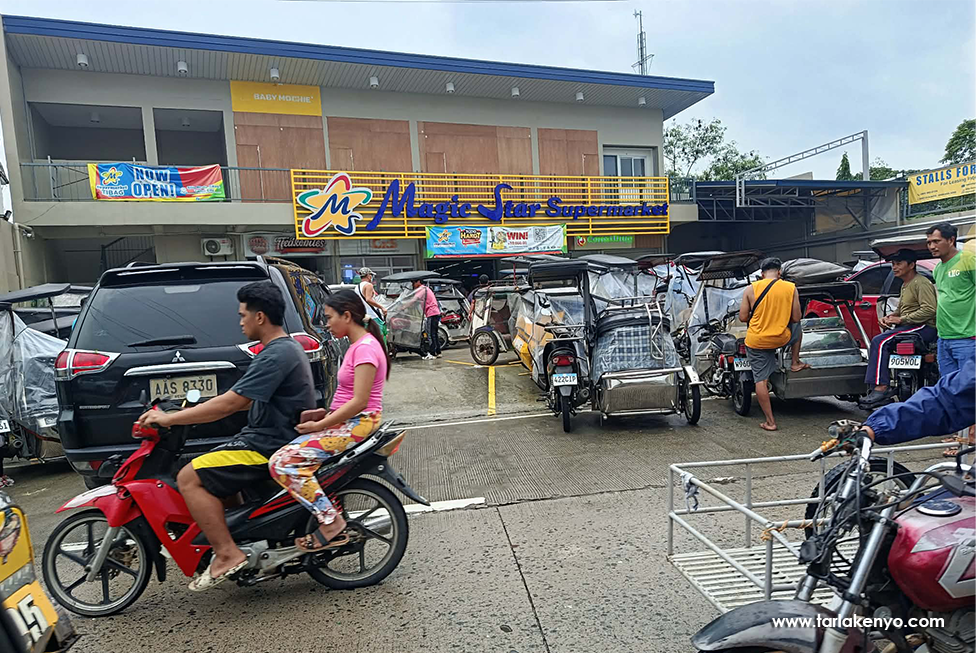
TARLAC CITY, Tarlac — Residents of Barangay Tibag and nearby communities braved heavy monsoon rains Sunday morning to rush to local grocery stores and neighborhood talipapa, driving panic buying after the back-to-back collapses of the Aquino and Agana bridges within less than 20 hours severed direct access to the city center.
The destruction of the two main structures spanning the Tarlac River effectively isolated thousands of residents in Tibag, San Isidro, and other northwestern barangays. With the primary routes to the Población closed, local residents turned to neighborhood shops, quickly depleting essential goods.
Amelia Cruz, a resident of Barangay Tibag, said she arrived at the local Magic Star grocery at 6:30 a.m., only to see hordes of shoppers arrive shortly after, mostly in tricycles.
“Nag-aalala kami na baka magtaas agad ng presyo ng bilihin. May talipapa dito kaya pati mga taga-katabing barangay dito na rin nagsisibili,” Cruz said.
The sudden surge in demand left several convenience stores and supply outlets stripped of key food items. Another Tibag resident, who requested anonymity, reported failing to secure basic supplies like canned goods and fresh meat due to rapid stock depletion and severe congestion.
“Out of stock na at sa ibang tindahan ang daming tao, wala nang maparkingang tricycle sa Magic Star. Pati 7-Eleven at O! Save nauubusan na rin,” she said, noting that her household typically shops in Tarlac City Población, located just three kilometers away.
The disappearance of a direct route impacts heavily populated areas north of the river. Based on the 2024 census, affected communities include Tibag with 17,936 residents, San Isidro (14,812), Sapang Maragul (13,287), Tibagan (7,025), Baras-Baras (5,736), Care (5,379), and San Juan de Mata (4,727).
Traveling to the Tarlac City Poblacion now takes roughly 1.5 hours via long detours. As a result, residents will find it far more practical to travel 22 kilometers to Santa Ignacia, reaching its town center in about 30 minutes.
