

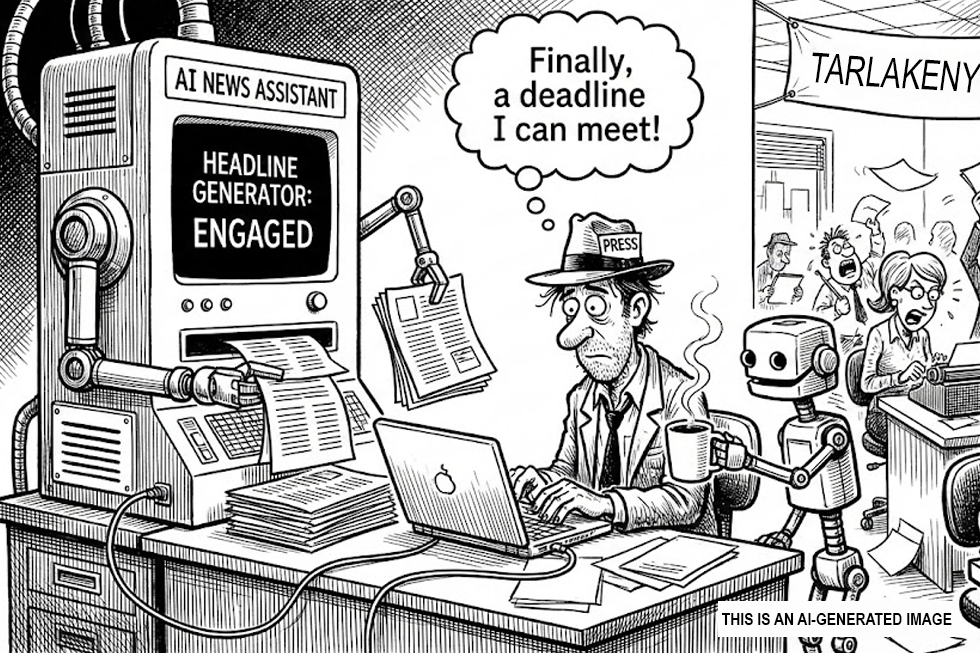
TARLAKENYO (January 18, 2026) — Artificial intelligence (AI) is making significant inroads into Philippine news media, a recent exploratory study by the Philippine Institute for Development Studies (PIDS) said.
Titled AI Use in Philippine News Media: Adoption, Impacts, and Challenges, the study reveals that adoption is a recent phenomenon, with most news organizations integrating AI tools since the early 2020s. Private media entities are leading the charge, while state-owned outlets are more cautious.
According to the study, a consensus among news organizations is that AI is primarily seen as a tool to enhance human work rather than replace journalists.
The technology is widely used for time-consuming tasks like transcription, translation, fact-checking, and content optimization, freeing up reporters for more in-depth work. Notably, no job losses have been directly attributed to AI adoption so far.
“AI is considered an augmentation tool rather than a replacement for human work. Human oversight and transparency are considered essential to maintain journalistic integrity,” the report stated.
The study identified several drivers for AI adoption: the presence of young, tech-savvy staff, a culture of innovation, cost-effectiveness, and the need for faster content production in a competitive digital landscape.
However, significant barriers remain. Concerns over “hallucinations” or inaccuracies in AI-generated content, fear of job displacement, high subscription costs for advanced tools, and resistance from older staff accustomed to traditional methods are slowing widespread integration.
The study also highlights broader systemic challenges. The “platformization” of news and content scraping by big tech companies is severely impacting media revenues. AI-powered platforms, such as Google’s AI Overviews or ChatGPT, summarize news directly for users, diverting traffic and crucial advertising revenue away from original news sites.
This practice also raises serious copyright and intellectual property issues, as media content is often used to train AI models without permission or compensation.
The study also calls for the media industry itself to strengthen self-regulation by updating ethical codes to govern AI use and for a nationwide enhancement of media and information literacy education to empower the public.
The future of Philippine media, the authors argue, depends on collaborative governance involving government, media, tech companies, and civil society to ensure AI strengthens rather than undermines democratic discourse.
You can download a copy of the PIDS study here.

